What 1,000 Telegram Group Members Cost, Broken Down by Source
Real price bands for scraped adds, ad-driven joins, cross-promo swaps and in-house audiences - with the retention math that tells you whether a $60 quote is cheap or expensive.
Someone quoted you $12 per 1,000. Someone else quoted $180. Both were describing the same deliverable in the same words, and neither explained the gap.
The gap is real and it is mostly retention, partly sourcing, and a little bit margin. Here is the arithmetic that lets you price a quote instead of guessing at one.
The only number that matters is cost per surviving member
Every price in this market is quoted per 1,000 delivered. Delivered means the join event fired. It says nothing about whether the account is still in your group next month, and the spread on that is enormous - from about 15% survival at the bottom of the market to over 90% at the top.
So convert everything to the same unit before comparing:
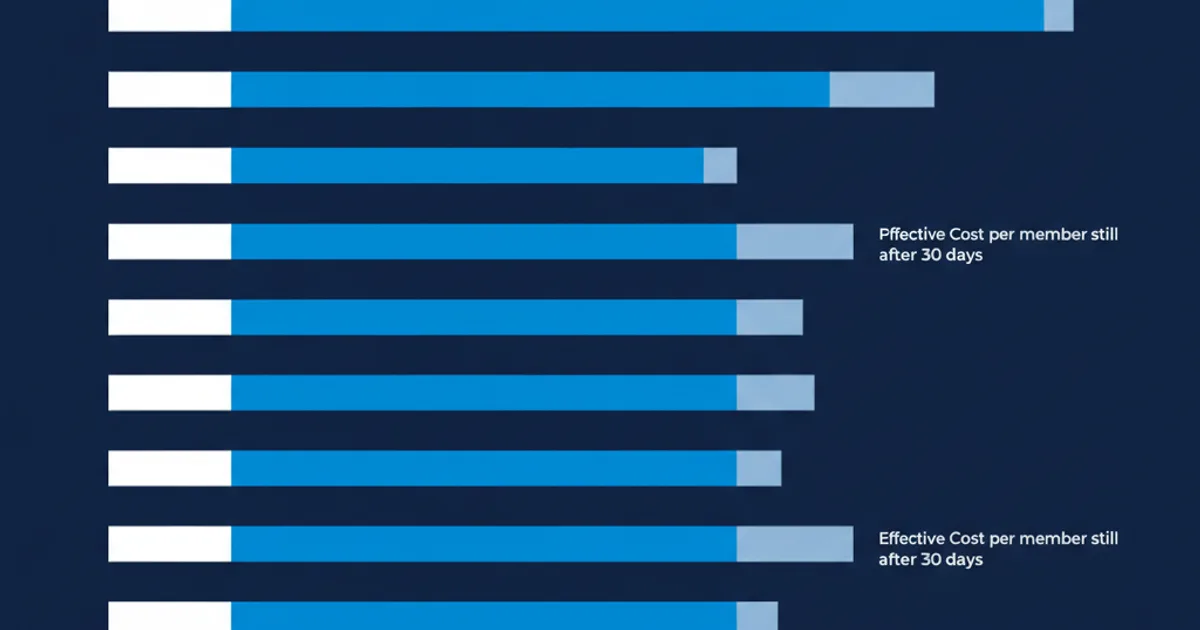
effective cost per 1,000 = quoted price ÷ (30-day survival rate)
A $15 order at 20% survival costs $75 per thousand members you actually keep. A $60 order at 85% costs $70.60. The cheap one is more expensive, and it also carries the risk profile of the cheap one.
Survival collapses for three reasons: the account was already at Telegram's 500-group ceiling and got auto-cycled, the account was bulk-registered and got banned in a sweep, or the vendor added it and pulled it back out to resell into the next order. That last one is common and it is why you should always snapshot your member count on day 1, day 7 and day 30.
Price bands by source
These are the bands we see across the market as of mid-2026, in USD per 1,000 delivered. Ranges are wide because geography moves them more than anything else - Tier-1 English-speaking members cost multiples of what South and Southeast Asian members cost, from every source in the table.
| Source | Per 1,000 delivered | Typical 30-day survival | Effective per 1,000 kept | Targetable? |
|---|---|---|---|---|
| Bulk-registered accounts, mass-added | $8 - $25 | 10 - 30% | $27 - $250 | No |
| Scraped adds from source groups | $45 - $120 | 60 - 85% | $53 - $200 | Yes, by group |
| In-house maintained audience | $50 - $110 | 75 - 90% | $56 - $147 | Yes, by segment |
| Telegram Ads (channel → group) | $150 - $600+ | 90%+ | $167 - $667 | Yes, by channel/topic |
| Meta ads to a t.me link | $200 - $900 | 90%+ | $222 - $1,000 | Yes, by interest/geo |
| Cross-promotion swaps | $0 cash, real cost in reach | 80 - 95% | $0 - see below | Partially |
| Referral loops with rewards | Cost of the reward | 50 - 80% | Reward ÷ survival | No |
The fourth column is just the second divided by the third - the low price against the best survival in the band, the high price against the worst - which is why its range is always wider than the price range. Two rows need unpacking because their headline numbers mislead.
Cross-promotion looks free and isn't. You post another group's link to your audience; they post yours. Your cost is the message slot plus the members you lose to their group. If your group of 8,000 sends 90 people to theirs and receives 110, you netted +20 for one post - fine, but it does not scale, and swap partners in your niche run out fast. Price it at zero cash and one unit of audience attention, then notice that you only have a few dozen of those per year before people tune out.
Referral loops price themselves by the reward. A $2 credit that converts 40% of the time is $5 per referred member before you account for people gaming it with second accounts. Referral programmes work best on groups that already have something worth referring; they are a multiplier, not a starting engine.
Why ad-driven joins cost five to ten times more
Because you are paying for attention and then converting it, with losses at every step, instead of paying for a join directly.
Telegram Ads sits in a specific place: sponsored messages appear in public channels - Telegram's own eligibility rules have historically required a channel to reach 1,000 subscribers before it can carry them - and they are priced CPM. Your group is not a channel, so the natural landing point for an ad is a channel or a bot, and you then need a second step to move that person into the group. Every step is a leak.
Meta is worse on measurement and often better on volume. You can point a link ad at t.me/yourgroup, but once the tap leaves Meta you have no join attribution at all - you are inferring conversion from the join curve, which means you cannot optimise the campaign on the event you care about. Budget for that blindness.
Neither of these is a bad channel. They are simply channels where you are buying an audience, not a member, and the difference in unit price reflects a difference in what is being sold.
Worked example: $600, three ways
A US deals group, 1,200 members, wants to reach roughly 11,000 before Black Friday. Budget: $600.
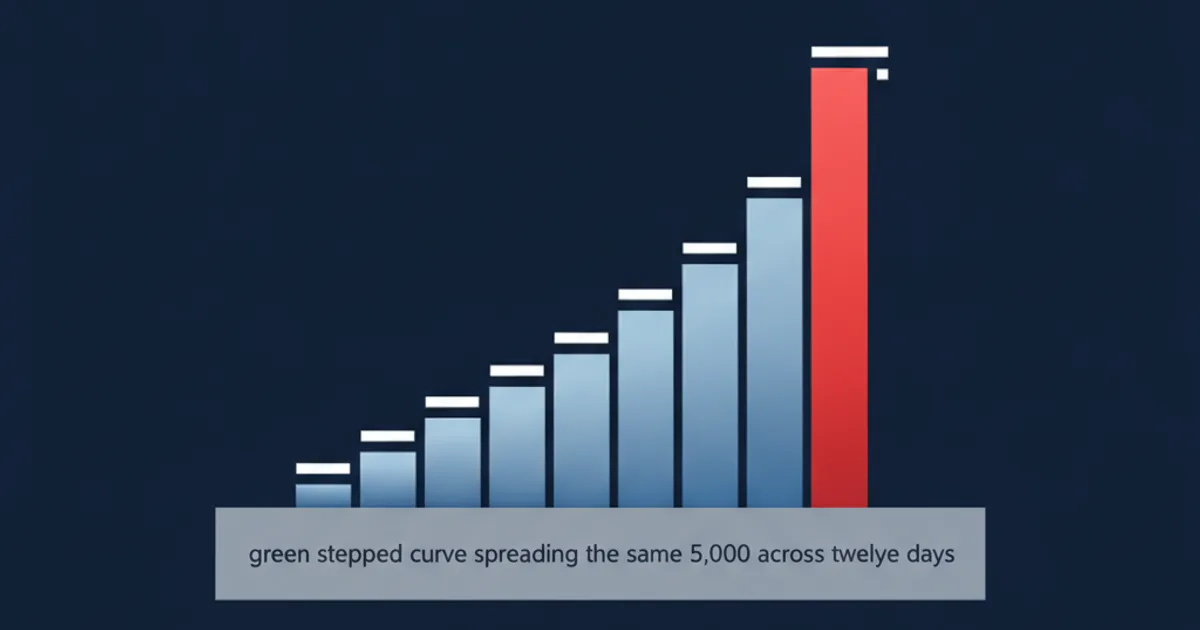
Option A - cheapest quote, $15 per 1,000. $600 buys 40,000 delivered. Sounds unbeatable. At 20% survival that is 8,000 kept, so $75 per kept thousand. But 40,000 joins into a 1,200-member group is a 33× change in size, which no pacing schedule can make look organic, and the accounts are almost all outside the US. The group ends up large, untargeted, and carrying a delivery signature that invites reports. Real value: near zero, plus risk.
Option B - Telegram Ads. At an assumed €2.50 CPM (treat that as an illustrative figure, not a quote - the floor moves and varies by targeting) and a 0.5% click-through into a channel, then 50% of those clickers moving on into the group, $600 buys roughly 220,000 impressions → ~1,100 clicks → ~550 group members. About $1,090 per 1,000. Every one of them tapped an ad about your topic, so engagement will be the best in this comparison. It also gets you 550 members, not 10,000.
Option C - paid delivery from named source groups. Ten thousand members clears the volume step at 10,000, so the rate is $56 per 1,000 and the order is $560, leaving $40 of the budget unspent. At 85% survival that is 8,500 kept, $65.90 per kept thousand. Sourced from ten named US deals and coupon groups, paced over five weeks. Ends at roughly 9,700 total members with a topical match.
Option C wins on volume-per-dollar, Option B wins on engagement-per-member, and Option A wins on nothing. In practice the split most operators land on is C for the base and B for the top of the funnel once the group is big enough to be worth advertising.
Sanity-checking any quote in ninety seconds
Take the quoted price, ask for the 30-day retention figure, and divide. If they won't give you a retention number, assume 40% and re-run the math - that assumption alone kills most cheap quotes.
Then check three things the price should imply:
- Can you name the source? Targeted delivery costs more than untargeted because someone has to do the scraping and filtering per order. A price under about $30 per 1,000 cannot be paying for that work.
- Is there a pacing schedule? Instant delivery is cheaper to produce and worse to receive. A quote that includes a multi-week schedule is quoting a different, more expensive service.
- What is the refill definition? "Lifetime refill" against no measured baseline is unenforceable. "Refill to the delivered count if it drops within 30 days, measured against the day-1 snapshot" is a real commitment.
At $60 per 1,000 with named source groups, TeleReach sits deliberately in the middle band - above the bulk-account floor, below anything ad-driven - because targeted sourcing and paced delivery both cost money to produce and both show up in what you keep. Volume moves it down in steps: $58 at 5,000, $56 at 10,000, $54 at 25,000, $52 at 50,000. That is a 13% discount at the top, not a 60% one, and the reason is that member cost is mostly variable, not fixed.
What usually goes wrong
Comparing on delivered, not kept. Covered above, and it is still the mistake that costs buyers the most money.
Ignoring geography in the quote. "1,000 members" without a country is a blank cheque for the vendor to fill with whatever is cheapest that week. If your monetisation depends on US shoppers, a group full of accounts in markets where your offer doesn't ship is worth nothing regardless of price.
Budgeting only for acquisition. A group of 10,000 needs moderation, a posting cadence, and probably an anti-spam bot. Set aside 20% of the growth budget for keeping the thing alive, or the retention numbers above become irrelevant.
Buying in one order. Split the budget: a small first order to measure real survival with your own snapshots, then the rest. The information from a $60 test is worth more than the volume discount you gave up.
Assuming the discount curve keeps going. Anyone offering $20 per 1,000 at volume is not passing on efficiency - the unit cost of a real member barely falls with scale. They are changing the product.
Next step
Snapshot your current member count today, with the date. That single number is what every retention claim you're about to receive should be measured against. Then run one small order - 1,000 members is the minimum and enough to measure - and check the count again on day 30 before committing the rest of the budget. Start with a 1,000-member test order and name the source groups your audience already sits in.
Need the members to go with the plan
Everything above works better with an audience already in the room. TeleReach adds members to your group from the groups your buyers already sit in, priced at $60.00 per 1,000 members, delivered gradually and tracked live while it runs. No subscription, and whatever is not delivered comes back to your wallet.