12 Questions That Expose a Bad Telegram Growth Vendor
A buyer-side vetting script for Telegram member services: the twelve questions, the answers a legitimate provider can give, and the evasions that predict a refund fight.
You are mid-purchase, the vendor is responsive, the price is fine, and you have no way to tell whether you are about to buy 10,000 members or 10,000 accounts that disappear in a fortnight.
The tell is not the website. It is what happens when you ask a question that a real operation can answer in one sentence and a reseller cannot answer at all. Twelve of those questions, in the order they are useful.
Questions 1-4: can they describe their own supply?
1. Where do the members come from?
A real answer names a mechanism: members are drawn from public groups you nominate, or from an audience the vendor maintains and re-engages, or from ad traffic they run. A vendor who says "our network" and stops has one of two problems - either they are a reseller with no visibility into supply, or the supply is bulk-registered accounts and they know saying so loses the sale.
Ask the follow-up: which groups, for my order? If the answer is "we choose", you are buying untargeted volume at a targeted price.
2. Can I name the source groups?
Yes or no, and the yes should come with a limit. Ten is a normal cap; unlimited is a sign nobody is doing the work per order. If they say yes, name a group and ask roughly how many members they expect to draw from it - the answer should be well under the group's total, because most members of any public group are inactive, already in your group, privacy-restricted, or at Telegram's group ceiling.
A vendor who says "we can pull all 40,000 from that group" has not run this before.
3. Direct add or invite link?
Both are legitimate. The point is that they know the difference and can say which one your order uses. Direct adds get blocked by anyone whose Groups & Channels privacy is set to My Contacts, and a run of those rejections is what limits the adding accounts. Link-driven joins bypass that entirely and can be gated behind join requests.
"Both, depending on the group" is a good answer. A blank pause is not.
4. What percentage of your accounts are Premium, and does it matter here?
This is a trap question, and a useful one. The honest answer is that Premium status barely matters for a member count - it raises the account's own group-and-channel ceiling from 500 to 1,000, which affects the vendor's supply economics, not your delivery quality. A vendor who upsells you on "Premium members for better engagement" is selling a story.
Questions 5-8: can they commit to numbers?
5. What is your 30-day retention rate, and how do you measure it?
The number matters less than the method. "About 85%, measured against the day-1 count we screenshot at delivery start" is a real answer. "99.9%" is not - nothing in this market retains at 99.9%, because Telegram bans accounts in sweeps that nobody controls.
6. What is the delivery schedule, in days?
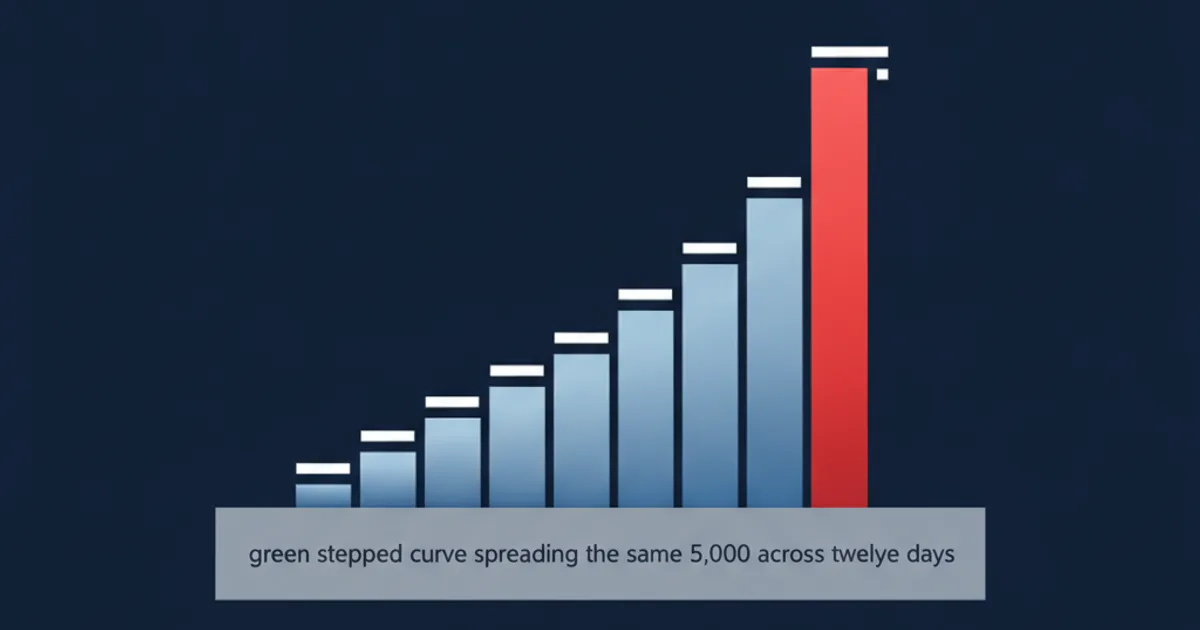
If the answer is "instant" or "within 24 hours" for a five-figure order, the vendor is optimising for their throughput, not your group's safety. Ask them to pace it. If they cannot pace it, their delivery is a script they run once, not a managed campaign.
7. Define the refill.
This is the single question that predicts refund disputes. Compare:
| Weak | Enforceable |
|---|---|
| "Lifetime refill guarantee" | "If the count drops below the delivered figure within 30 days, we top it back up" |
| "We replace drops" | "Measured against the screenshot we both take at delivery completion" |
| "Contact support if there's an issue" | "One refill claim per order, raised within 30 days, resolved in 7" |
Get the baseline, the window, and the resolution time. A vendor who resists writing those three down will resist honouring them.
8. What happens if Telegram limits my group during delivery?
The honest answer includes the word "pause". Any vendor who says this cannot happen is either lying or has never delivered enough volume to see it. What you want to hear: delivery halts, they investigate, and you are not billed for undelivered volume.
Questions 9-12: are they a business or a Telegram handle?
9. What do you need from me - and specifically, what admin rights?
Correct answer: your group's invite link, or admin rights limited to Add Users / Invite Users via Link. That is all delivery needs.
Any request for your account login, phone number, or a login code is disqualifying and there is no exception. A code sent to your Telegram is a session takeover, not a delivery requirement. The same goes for a request to make them a full admin with Add New Admins enabled - that permission lets them lock you out of your own group.
10. How do I pay, and what happens if I dispute?
Crypto-only is normal in this market and not by itself a red flag; card processing for Telegram growth is genuinely hard to obtain. What matters is whether there is an account, an order record, and a wallet balance you can see - or whether the entire transaction lives in a DM thread that can be deleted.
11. Who is accountable if it goes wrong - and can I see an order history?
A platform with logins, order records and a support address is a different risk profile from a handle on a forum. You are not looking for a corporate registration. You are looking for evidence that your order exists somewhere other than a chat.
12. What can you not do?
The best question on the list. Every honest operator has a list: cannot guarantee engagement, cannot deliver members who will buy, cannot target by age or income, cannot recover a group that gets restricted, cannot make delivered members read your posts. A vendor whose answer to "what are your limits" is "nothing, we can do anything" has told you precisely how much of the rest was true.
Worked example: scoring two quotes
Same order - 10,000 members into a US deals group currently sitting at 1,200 - put to two vendors.
Vendor A. $22 per 1,000, so $220. Delivery "12-48 hours". Source: "our premium network". Retention: "99% guaranteed, lifetime refill". Cannot name source groups. Asks for admin rights including Add New Admins. Payment by direct crypto transfer to a wallet address in chat.
Score it honestly. Delivery in 48 hours into a group of 1,200 is a 9× overnight change. The retention claim is impossible. No source naming means untargeted. The admin request is a takeover risk. Expected outcome: 10,000 delivered, maybe 2,500 present at day 30 - $88 per kept thousand - with a real chance the group gets reported.
Vendor B. $56 per 1,000 at this volume, so $560. Delivery paced across five weeks. Source: ten public groups you name. Retention: "typically 80-90%, measured against the day-1 screenshot; refill window 30 days". Needs an invite link or Add Users rights only. Order visible in an account dashboard.
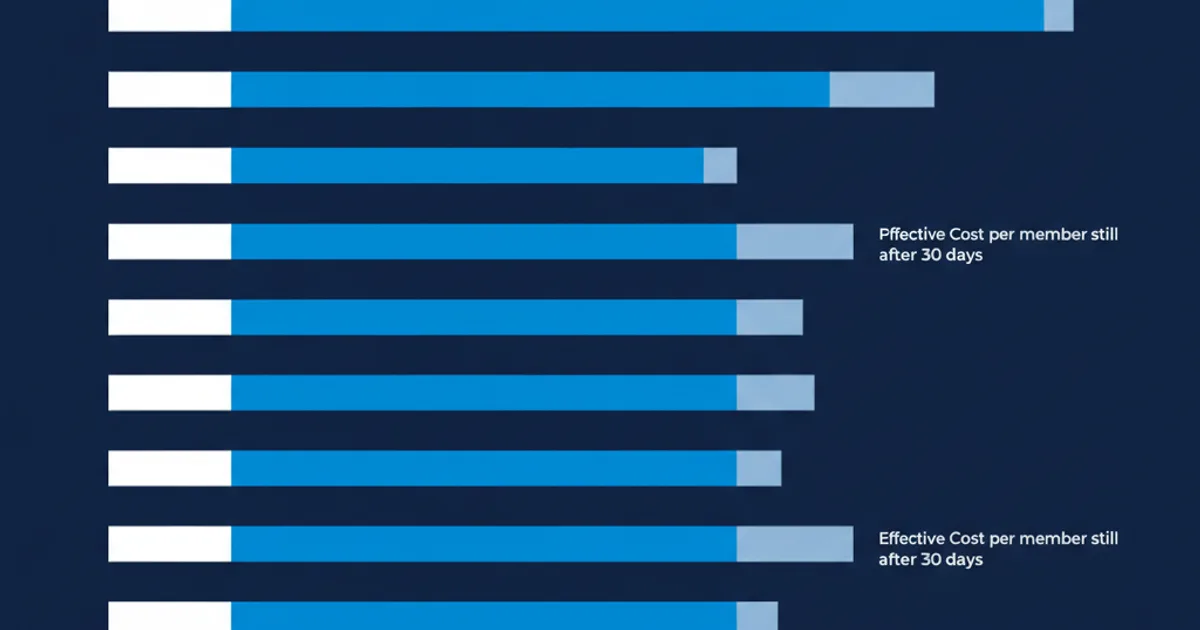
$560 for roughly 8,500 kept, topical, at $65.90 per kept thousand. Two and a half times the sticker price of Vendor A and a quarter cheaper per member you retain - before counting the risk difference.
The gap between those two quotes is not margin. It is whether anyone did any work.
Where we land on our own checklist
Since the list is only fair if it is applied to us: TeleReach draws members from public groups you name - up to ten per order - or from our US online-shopper audience when you would rather not pick sources yourself. $60 per 1,000, stepping down to $52 at 50,000. Delivery needs your invite link or Add Users rights and nothing else; we never ask for a login code. Orders, wallet balance and fulfilment status live in an account you log into, not in a chat thread. And question twelve: we cannot promise engagement, we cannot guarantee members buy anything, and we pause delivery rather than push through a group that starts throwing errors.
What usually goes wrong
Asking all twelve at once. Send them as a conversation. Evasion is much easier to spot in a follow-up than in a bulk reply that someone pastes from a template.
Accepting a screenshot as proof of past work. Member counts are trivially faked in a screenshot. Ask for a public group you can open and check yourself.
Paying the full amount up front on order one. Buy the minimum first - 1,000 members is enough to measure retention - and treat the result as the real answer to question five.
Forgetting to snapshot. Every refill clause depends on a baseline. If you did not record the count and date at delivery start, you have no claim, and a vendor arguing in bad faith knows this.
Confusing responsiveness with reliability. Fast replies during the sale mean nothing. Ask a question on day 15 of a 30-day window and see how fast the reply comes then.
Next step
Copy the twelve questions into your next vendor conversation and send the first four before you discuss price at all. If those four come back specific, the price conversation is worth having; if they come back vague, you have saved yourself a refund dispute. When you want the answers in writing before you spend anything, open an account and place a 1,000-member test order - the order record itself is question eleven, answered.
Need the members to go with the plan
Everything above works better with an audience already in the room. TeleReach adds members to your group from the groups your buyers already sit in, priced at $60.00 per 1,000 members, delivered gradually and tracked live while it runs. No subscription, and whatever is not delivered comes back to your wallet.